• /
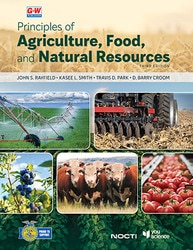
  • Principles of Agriculture, Food, and Natural Resources, 3rd Edition

Principles of Agriculture, Food, and Natural Resources, 3rd Edition

• Introduces agriculture, food systems, natural resources, and agriscience careers.
• Builds leadership, STEM, communication, and career-ready skills.
• Hands-on learning with SAE projects and industry certification alignment.

Title Overview

Title Overview

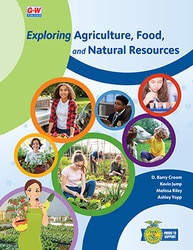
Written by leaders in agriculture education, Principles of Agriculture, Food, and Natural Resources is a user-friendly, visual introduction to the systems and concepts that define modern agriculture, including food systems and natural resources. This text is aligned with AFNR standards, providing practical information on building leadership, communication, and career-ready skills while integrating pedagogical tools designed for learner success. Using a modern approach to learning design, information is delivered in smaller sections so students can process and interact with the review and assessment, encouraging application, analysis, evaluation, and creation. This comprehensive text welcomes today's learners to the diverse and exciting world of agriscience and FFA opportunities, encouraging students to participate in their schools and communities and enroll in advanced courses.

  • To connect classroom and experiential learning,Supervised Agricultural Experience (SAE) for All Connectionsintroduces SAEs aligned to careers, while all-newSAE for ALL OpportunitiesandCheck-insprovided at the end of each chapter act as additional springboards for planning and decision-making.
  • STEM Connectionsappear frequently within lessons and challenge learners to apply AFNR concepts as a multidisciplinary science.
  • TheStudent Lab Workbookincludes hands-on applications for each lesson, while theOnline Learning Suiteoffers additional activities with access to the AFNR video library of over 30 videos, scripted and produced by Ag experts on topics of high interest for students.
  • Correlated to the YouScience® Industry Certifications exam and the NOCTI Exam to help students obtain real-world job skills and achieve certification.

Table of Contents

Table of Contents

Unit 1: Introduction to Agriculture
Unit 2: Structural, Power, And Technical Systems
Unit 3: Food And Animal Systems
Unit 4: Plant Systems
Unit 5: Environmental And Natural Resources Systems

Instructor Resources

Instructor Resources

Hit the ground running with G-W's Online Instructor Resources that save you time and make it easier to prepare for class, reinforce new concepts, and assess learning. Created by educators for educators, these complete teaching packages are ready to go and will instantly make a difference in your class. Best of all—Instructor Resources are free with qualified purchases!


  • Lesson Plans and Activities Experienced teachers have developed detailed lesson plans and creative activities to accompany the textbooks. There's no need to spend days recreating your courses—they have done it for you!

  • PowerPoint® Presentations Editable slides for each chapter engage a variety of learning styles, improve student focus, encourage discussion, and provide visual impact.

  • Workbooks Creative workbook activities inspire students to review and apply concepts.

  • Interactive Content Additional interactive content including flash cards, animations, and interactive activities enhance the learning experience.

  • Assessments: The new cloud-based G-W Assessment platform allows you to create, customize, assign, and print prebuilt questions and tests. No more downloads, uploads, or imports needed! Integrate it with your LMS for autograded assignments, advanced reporting, and scores that flow into your gradebook.

Look Inside

Look Inside

The Look Inside is for preview purposes only. The format of the actual product may vary from the image shown.

About the Author

About the Author

Dr. John Rayfield

is a professor and serves as the Program Coordinator for Agricultural Education in the Department of Agricultural Education and Communications at Texas Tech University. Dr. Rayfield earned his bachelor's degree in agricultural education from Auburn University, his master's degree in agricultural extension from the University of Georgia, and his doctorate in agricultural education from Texas Tech University. In 2001, his school's FFA chapter was recognized as the Outstanding Middle School Program in the nation by the National FFA. Dr. Rayfield has been recognized at many levels for his teaching, research, and service to agricultural education. He is a Texas Tech Integrated Scholar, an Auburn University College of Education Outstanding Alumnus, and the Journal of Agricultural Education Author of the Year. Dr. Rayfield is actively involved in livestock showing and judging. He serves as superintendent for the National 4-H Livestock Judging Contest and judges junior and open livestock shows across the United States.


Dr. Kasee Smith

is an Associate Dean and Director of Academic Programs and Faculty Affairs in the College of Agricultural and Life Sciences at the University of Idaho. She oversees the delivery and planning for CALS academic and curriculum programs, coordinating the efforts to recruit, retain, and enhance success in CALS students, and provide support to faculty across their careers.

Dr. Smith earned her bachelor's degree in agricultural education from Utah State University and taught high school agricultural education for 11 years. Her program emphasized full integration of classroom and laboratory instruction, Supervised Agricultural Experiences, and FFA. Recognized as a National FFA Model of Innovation chapter, her program produced numerous national proficiency award recipients and Career and Leadership Development Event winners. During her secondary teaching career, Dr. Smith received the Region I Ideas Unlimited Award and a National Association of Agricultural Educators Teacher Turn the Key Award. She also served as an officer in the Utah Association of Agricultural Educators, and on the Utah State Department of Education Instructional Materials Review Committee and led multiple curriculum development initiatives.

Dr. Smith earned her doctoral degree from Texas A&M University and joined the University of Idaho faculty in 2016. Her work centers on teacher preparation, experiential learning, work-ready skill development, and instructional communication in agricultural education. She continues preparing educators across the Pacific Northwest and lives on a working agricultural operation in northern Idaho, where her family manages cattle, sheep, and forage crop production alongside an equestrian facility.


Dr. Travis Park

is a professor of agricultural education at North Carolina State University, where he instructs the teaching methods course and coordinates student teaching. He assists with Developing Educational Leaders and Teachers of Agriculture (DELTA), an alternative licensure professional development program for agriculture teachers in North Carolina. Dr. Park earned his bachelor's and master's degrees from Purdue University in agricultural education. Upon graduation, he received the 1996 G. A. Ross Award, which recognizes the outstanding senior graduating class. After Purdue, Dr. Park taught agriculture at Tri-County High School in Wolcott, Indiana, for five years, during which his program was recognized as one of the top agriculture programs in the nation. The Tri-County FFA Chapter was a national three-star chapter for most of his tenure. Dr. Park earned his doctoral degree from the University of Florida in 2005. He is the Program Coordinator for Agricultural Education in the Department of Agricultural and Human Sciences; he is a Fellow of the American Association for Agricultural Education; and he has served as President of the National Council for Agricultural Education. Dr. Park is the National Director for Agricultural Education, National FFA Adviser, and Chair of the National FFA Board of Directors. His research focuses on agricultural literacy, teacher professional development, and engagement with agriculture. Dr. Park is an avid backpacker, gardener, and beekeeper.


Dr. Barry Croom

has over 38 years of experience in agricultural and extension education. He is currently a professor in agricultural leadership, education, and communication at the University of Georgia and the undergraduate program coordinator for the University of Georgia Tifton campus. His interest in the field began as a high school junior when he coached his first dairy judging team for the local junior high school FFA program. Dr. Croom began his professional career as a high school agricultural education teacher. While teaching full-time, he earned his master's in agricultural education. While a high school teacher, Dr. Croom was chosen by the National FFA Organization to develop and present in-service workshops to teachers nationwide. His students received state and national recognition for academic achievement. He has earned both the American FFA Degree and the Honorary American FFA Degree from the National FFA Organization. In 1996, Dr. Croom became an extension associate responsible for the statewide FFA Program at North Carolina State University.

After earning his doctoral degree in 1999, Dr. Croom advanced through various roles, becoming an Alumni Distinguished Undergraduate Professor at North Carolina State University. He has served as an agriculture teacher, teacher educator, extension associate, state education staff member, professor, and university administrator. Dr. Croom has taught courses in leadership, communication, experiential learning, instructional methodology, educational program planning, and youth development. He maintains a research program that focuses on effective teaching, career and technical education policy, and historical studies in agricultural and extension education.


Course Content

Course Content

What Educators Are Saying

QuoteA very high-quality textbook...Offer a variety of lesson options—videos, slideshows, notes, workbook pages, hands-on activities… Quote

Beth Zuilhof, River Valley Middle School, TX
Course Content
Online Instructor Resources Ad
Professional Learning Ad

FAQs

Upon purchase, you will receive an email with a keycode to redeem in your Learning Management System (LMS). Students: log into your school’s LMS and access your course. You will then follow the directions to activate your subscription.