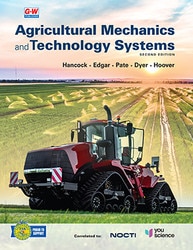


Agricultural Mechanics and Technology Systems, 2nd Edition
• Master agricultural mechanics, welding, electricity, construction, and power systems.
• Explore precision agriculture, drones, GIS, and emerging ag technologies.
• Build career-ready skills through hands-on labs, safety training, and SAE projects.
Title Overview
Title Overview
Agricultural Mechanics and Technology Systems presents focused, technically accurate coverage of all major skilled trade disciplines in agricultural contexts, including construction, electricity, welding, and power systems. In addition, the text provides a wealth of information and resources on careers in agricultural mechanics and promotes a deep understanding of supervised agricultural experiences (SAEs) and career development events (CDEs). The second edition has been updated with over 500 new images and 35 new Career Connection features to portray up-to-date tools, technologies, and career opportunities. A chapter on Precision Agriculture and Emerging Technologies introduces students to the many high-tech applications, including geographic information systems (GIS), telematics, sustainable energy sources, precision agriculture, wireless sensor networks, and the use of drones.
- A chapter on safety and over 90 extensive "Safety Notes" cultivate a safety-first mindset and drive home the point that safe work habits are needed in every domain of agricultural mechanics and technology.
- "Hands-on Agriculture" and "STEM and Academic Activities" provide engaging, inquiry-based learning activities for students and provide a bridge between theory and practice.
- To connect classroom and experiential learning, all-new Supervised Agricultural Experience (SAE) Profiles introduce real stories of successful projects, while SAE for ALL Opportunities and Check-ins provided at the end of each chapter act as additional springboards for planning and decision-making.
- The Student Lab Workbook includes additional hands-on applications for each lesson while the Online Learning Suite offers additional activities with access to the AFNR video library of over 70 videos, scripted and produced by Ag experts on topics of high interest for students.
Table of Contents
Table of Contents
Instructor Resources
Instructor Resources
Hit the ground running with G-W's Online Instructor Resources that save you time and make it easier to prepare for class, reinforce new concepts, and assess learning. Created by educators for educators, these complete teaching packages are ready to go and will instantly make a difference in your class. Best of all—Instructor Resources are free with qualified purchases!
- Lesson Plans and Activities
Experienced teachers have developed detailed lesson plans and creative activities to accompany the textbooks. There's no need to spend days recreating your courses—they have done it for you! - PowerPoint Presentations
Editable slides for each chapter engage a variety of learning styles, improve student focus, encourage discussion, and provide visual impact. - Workbooks
Creative workbook activities inspire students to review and apply concepts. - Interactive Content
Additional interactive content including flash cards, animations, and interactive activities enhance the learning experience.
Look Inside
Look Inside
The Look Inside is for preview purposes only. The format of the actual product may vary from the image shown.
Text

Standards and Correlations
Standards and Correlations
NOCTI Correlations
Texas
About the Author
About the Author
Course Content
What Educators Are Saying
 My favorite part is the SAE and Career connections.... That is a feature that is extremely valuable, yet many competing textbooks are lacking.
Thomas Poole, South Warren High School, Bowling Green, KY
You Might Also Like