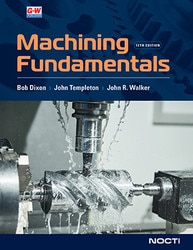


Machining Fundamentals, 12th Edition
• Covers machining fundamentals, CNC, GD&T, and advanced manufacturing processes.
• Emphasizes safety, machining operations, setups, and troubleshooting skills.
• Includes digital labs, videos, activities, and hands-on learning tools.
Instructors and Administrators: Call 800.323.0440 to order now; receive delivery in time for January classes.
Title Overview
Title Overview
Machining Fundamentals is a comprehensive text that offers a clear, easy-to-understand introduction to the various machining operations, setups, and procedures, providing an outstanding value for introductory courses. With a strong emphasis on safety, this colorful and detailed textbook covers the many common methods of machining and shaping parts to meet given specifications. It also covers more advanced processes, such as laser machining, water-jet cutting, high-energy-rate forming (HERF), cryogenics, chipless machining, electrical discharge machining (EDM), electrochemical machining (ECM), robotics, and rapid prototyping. The importance of computer numerical control (CNC) in the operation of most machine tools and its role in automated manufacturing is explored thoroughly. The latest geometric dimensioning and tolerancing (GD&T) standards from ASME Y14.5 are also covered. The new edition has a new Math Review chapter to help students with the applied math skills they will need in their machining careers. Digital users have access to the online book and student lab workbook, interactive activities, virtual toolbox, and video clips with practical hands-on demonstrations.
- Exciting new instructional design aligns the Learning Outcomes with the section headings, summaries, and end-of-chapter questions.
- New photos and content reflect industry changes in technology, including basic CNC coding, machines currently in use, and troubleshooting tips.
- Career Connections, Workplace Skills, and Pro Tip features engage, motivate, and prepare students for career success.
Table of Contents
Table of Contents
1. An Introduction to Machining Technology
2. Careers in Machining Technology
3. Shop Safety
4. Math Review
5. Understanding Drawings
6. Measurement
7. Layout Work
8. Hand Tools
9. Fasteners
10. Jigs and Fixtures
11. Cutting Fluids
12. Sawing, Cutoff, and Band Machining
13. Drills and Drilling Machines
14. Offhand Grinding
15. The Lathe
16. Other Lathe Operations
17. Cutting Tapers and Screw Threads on the Lathe
18. The Milling Machine
19. Milling Machine Operations
20. Precision Grinding
21. Introduction to CNC Machining
22. CNC Programming Basics
23. CNC Milling
24. CNC Turning
25. Automated Manufacturing
26. Quality Control
27. Geometric Dimensioning and Tolerancing
28. Metal Characteristics
29. Heat Treatment of Metals
30. Metal Finishing
31. Electromachining Processes
32. Nontraditional Machining Techniques
33. Other Processes
Glossary
Appendix Reference Section
Index
Instructor Resources
Instructor Resources
Hit the ground running with G-W's Online Instructor Resources that save you time and make it easier to prepare for class, reinforce new concepts, and assess learning. Created by educators for educators, these complete teaching packages are ready to go and will instantly make a difference in your class. Best of all—Instructor Resources are free with qualified purchases!
- Lesson Plans and Activities Experienced teachers have developed detailed lesson plans and creative activities to accompany the textbooks. There's no need to spend days recreating your courses—they have done it for you!
- PowerPoint® Presentations Editable slides for each chapter engage a variety of learning styles, improve student focus, encourage discussion, and provide visual impact.
- Workbooks Creative workbook activities inspire students to review and apply concepts.
- Interactive Content Additional interactive content including flash cards, animations, and interactive activities enhance the learning experience.
- Assessments: The new cloud-based G-W Assessment platform allows you to create, customize, assign, and print prebuilt questions and tests. No more downloads, uploads, or imports needed! Integrate it with your LMS for autograded assignments, advanced reporting, and scores that flow into your gradebook.
Look Inside
Look Inside
The Look Inside is for preview purposes only. The format of the actual product may vary from the image shown.
Text

Standards and Correlations
Standards and Correlations
NIMS Classic Standards
NOCTI Correlations
About the Author
About the Author
Course Content
What Educators Are Saying
 The text is very thorough and covers everything I think an aspiring machinist should know.
J. Carpenter
You Might Also Like