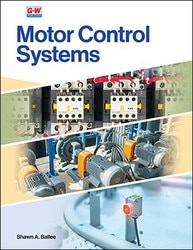


Motor Control Systems
• Covers motor control, automation, PLCs, drives, and industrial systems.
• Hands-on labs build troubleshooting, maintenance, and circuit skills.
• Safety-focused training with NEC 2026 updates and modern technologies.
Title Overview
Title Overview
Motor Control Systems is designed for programs training technicians for careers in automation and control systems technology. This new title introduces students to the principles of control circuit logic and operation, industrial control components, magnetic and programmable controllers, and the design, operation, and maintenance of electric motors. Written for the beginning technician, this comprehensive title provides a foundation for learning the skills needed to operate, maintain, and troubleshoot industrial control systems. Hands-on lab activities are featured throughout the text to provide practical applications.
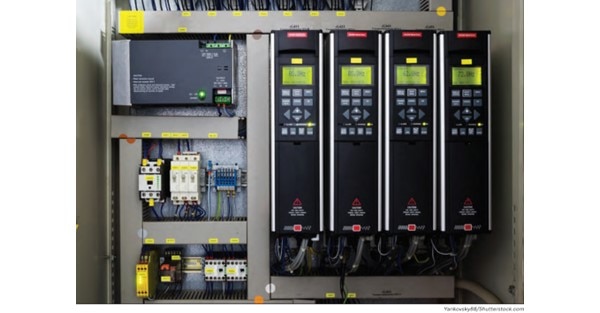
Extensively illustrated, the textbook is organized in a logical sequence and covers introductory topics in depth before moving on to more advanced applications. The textbook begins with coverage on workplace safety, interpretation of electrical diagrams, and proper use of electrical test equipment, and features in-depth coverage of contactors and motor starters, AC and DC motors, and motor starting and stopping methods. The textbook also provides modern coverage of electronic control methods, components, and controllers, including power semiconductors, sensors, solid-state relays, soft starters, variable frequency drives, and programmable logic controllers.
- Detailed illustrations throughout the textbook show newer control devices, programmable devices, ladder diagrams, power circuit wiring diagrams, and more.
- Short lab activities at the end of each chapter provide a strong emphasis on circuit builds, and the lab workbook offers additional hands-on activities.
- The textbook includes up-to-date references to the 2026 version of the National Electrical Code® (NEC).
Table of Contents
Table of Contents
1. Workplace Safety
2. Basic Electrical Principles
3. Electrical Diagrams
4. Electrical Test Equipment
5. Local Electrical Distribution and Installation
6. Circuit Components
7. Contactors and Motor Starters
8. Electrical Production, Generators, and Power Distribution
9. DC Motors
10. AC Motors
11. Transformers
12. Motor Reversing and Stopping Methods
13. Motor Starting
14. Diodes, Rectifiers, and DC Power Supplies
15. Power Semiconductors
16. Sensors
17. Solid-State Relays, Contactors, and Soft Starters
18. Variable Speed Drives and Servo Motors
19. Programmable Logic Controllers
20. Human-Machine Interfaces
21. Instrumentation
Instructor Resources
Instructor Resources
Hit the ground running with G-W's Online Instructor Resources that save you time and make it easier to prepare for class, reinforce new concepts, and assess learning. Created by educators for educators, these complete teaching packages are ready to go and will instantly make a difference in your class. Best of all—Instructor Resources are free with qualified purchases!
- Lesson Plans and Activities Experienced teachers have developed detailed lesson plans and creative activities to accompany the textbooks. There's no need to spend days recreating your courses—they have done it for you!
- PowerPoint Presentations Editable slides for each chapter engage a variety of learning styles, improve student focus, encourage discussion, and provide visual impact.
- Workbooks Creative workbook activities inspire students to review and apply concepts.
- Interactive Content Additional interactive content including flash cards, animations, and interactive activities enhance the learning experience.
- Assessments: The new cloud-based G-W Assessment platform allows you to create, customize, assign, and print prebuilt questions and tests. No more downloads, uploads, or imports needed! Integrate it with your LMS for autograded assignments, advanced reporting, and scores that flow into your gradebook.
Look Inside
Look Inside
The Look Inside is for preview purposes only. The format of the actual product may vary from the image shown.
Text

About the Author
About the Author
Course Content

What the Authors Are Saying
 Troubleshooting methodology is emphasized throughout the text to help you become a problem solver who can analyze and diagnose a system failure and determine the true cause of a problem.
Shawn Ballee
You Might Also Like