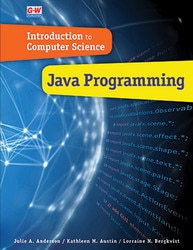
Introduction to Computer Science: Java Programming
• Learn computer science fundamentals through coding, problem-solving, and computational thinking.
• Develop programming skills with hands-on projects and real-world technology applications.
• Explore computing careers while building a strong foundation in software development and design.
Title Overview
Title Overview
Java is an easy-to-learn programming language that has many applications. Introduction to Computer Science: Java Programming is designed to introduce students to the basics of Java programming, while making cross-curricular connections to math, science, and language arts.
The text begins by covering the computer science concepts of computational thinking and encoding to prepare students for coding in Java. The journey begins by constructing a simple program. It then progresses by creating more intricate programs while learning about variables, expressions, classes, repetition, and much more.
By studying this text, students will have many opportunities to apply the coding knowledge they have acquired, including troubleshooting and debugging errors. In addition, they will learn about the careers open to computer programmers as well as the impact computer science has on society.
- The content is written specifically for the secondary market, using an instructional design appropriate for students.
- A unique approach is used by providing instruction for computer science concepts in the context of Java programming.
- Cross-curricular features (math, science, and language arts) are presented throughout. This enables students to connect coding knowledge and skills to everyday subjects.
- English language arts skills are applied throughout each chapter from the Tier 3 vocabulary terms to the reading, writing, speaking, and listening activities in the Communication Skills section at the end of each chapter.
- Essential Question at the beginning of each chapter section engages students as they uncover the main topics presented in the content.
- Activity files are provided on the student companion website to provide hands on opportunities for students.
- Lab manual is available to extend learning and application of coding skills.
Table of Contents
Table of Contents
1. Computational Thinking
2. Encoding
3. Introduction to Java Programming
4. Variables
5. Java Expressions
6. Classes
7. Drawing
8. Selection
9. Repetition
10. String Processing
11. Managing Input and Output
12. Custom Classes and Methods
13. Working with Arrays
14. Graphical User Interfaces
15. Careers in Computer Programming
16. Computing and Society
Instructor Resources
Instructor Resources
Hit the ground running with G-W's Online Instructor Resources that save you time and make it easier to prepare for class, reinforce new concepts, and assess learning. Created by educators for educators, these complete teaching packages are ready to go and will instantly make a difference in your class. Best of all—Instructor Resources are free with qualified purchases!
- Lesson Plans and Activities
Experienced teachers have developed detailed lesson plans and creative activities to accompany the textbooks. There's no need to spend days recreating your courses—they have done it for you! - PowerPoint Presentations
Editable slides for each chapter engage a variety of learning styles, improve student focus, encourage discussion, and provide visual impact. - Workbooks
Creative workbook activities inspire students to review and apply concepts. - Interactive Content
Additional interactive content including flash cards, animations, and interactive activities enhance the learning experience.
Standards and Correlations
Standards and Correlations
South Carolina

Texas
About the Author
About the Author
Course Content
Cross-curricular connection features Language Arts and Java, Math and Java, and Science and Java
You Might Also Like