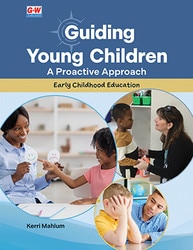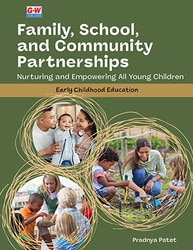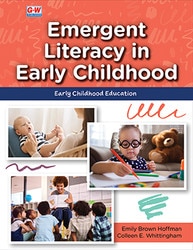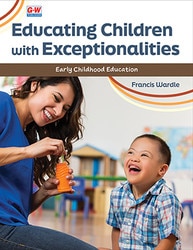
ECE Video Library
• Observe 139 authentic videos showcasing real early childhood classroom interactions.
• Explore best practices in child development, learning environments, and inclusive education.
• Connect theory to practice with unscripted examples from real ECE settings.
Title Overview
Title Overview
The G-W ECE Video Library contains 139 videos—exclusively available from G-W—showcasing authentic examples of classroom interactions between children and instructors. Topics include Assessing Fine Motor Skills, Associative Play, Culture and Diversity, Emergent Literacy, Health and Safety, Integrating Science and Art, Music and Movement, Outdoor Time, Washing Hands, Orthopedic Impairment, Emotional Disturbance, Art Assistive Technology, and many more. G-W ECE titles include the videos that are specific to the content of each book, along with guided worksheets to help students review and evaluate the video clips.
- The videos were filmed in three developmentally appropriate learning environments: a traditional learning center for infants, toddlers, and preschoolers; a bilingual Montessori facility for preschoolers and school-age children; and an early childhood special education facility for children with exceptionalities.
- The videos are rich in examples of childcare best practices and effective classroom design.
- The videos feature children in the classroom and at play, providing students with a front-row seat to learning experiences and key ECE concepts as they occurred, unscripted, in real learning environments.
Table of Contents
Table of Contents
1. Activity in the Block Area
2. Adaptive Development
3. Afternoon Circle Time
4. Art
5. Art Assistive Technology
6. Art for Infants
7. Art Project
8. Art Project 2
9. Assessing Fine Motor Skills
10. Assessing Fine Motor Skills: Self-Feeding
11. Assessing Physical Development
12. Associative Play
13. Associative Play in Block Area
14. Authentic Conversations with Toddlers
15. Bilingual Snack Time
16. Block Building
17. Breakfast Conversation
18. Breakfast Conversation with Spelling
19. Children Playing in Different Areas
20. Circle Time
21. Classroom Management
22. Clean-Up Time
23. Culture and Diversity
24. Development
25. Dramatic Play
26. Dramatic Play
27. Drop Off Time
28. Drop-Off Time for Infants
29. Drop-Off Time for Toddlers
30. Eating with a Fork
31. Elementary Writing Practice
32. Emergent Literacy: Child Looking Through Book Independently
33. Emergent Literacy: Child Writing Letters
34. Emotional Disturbance
35. Executive Functioning Skills
36. Feedback Loops
37. Fine-Motor Materials
38. Fish Mat
39. Group Time Language Development
40. Group Transitions
41. Guidance Techniques
42. Hands on Learning - Basketball
43. Hands on Learning - Parachute
44. Hands on Learning - tunnel
45. Health and Safety
46. Health and Safety Measures
47. Independent Work with Glue
48. Independent Work: Social Studies
49. Independent Work: Writing
50. Individual Language Development
51. Individual Schedule for Infants
52. Individual Transitions
53. Infants Engaged in Solitary Play
54. Integrating Science and Art
55. Interaction with Responsive Caregiver
56. Interview with Montessori School Administrator
57. Interview: Montessori Method
58. Interview: Why Montessori?
59. Investigative Play
60. Learning Spanish Words
61. Library Area
62. Library/Reading Area
63. Math
64. Meals and Snacks at Montessori
65. Modeling
66. Morning Circle Time
67. Morning Meeting
68. Mouthing and Physical Development
69. Multiculturalism in Preschool
70. Music and Movement Area
71. Music and Movement Area
72. Non-Verbal Cues
73. Onlooker Play
74. Orthopedic Impairment
75. Outdoor Play
76. Outdoor Time
77. Parallel Play
78. Phonics Instruction
79. Physical Development
80. Playing with Blocks
81. Preschoolers Engaged in Authentic Conversation
82. Preschoolers Engaged in Dramatic Play
83. PT 1-on-1-Balance Board
84. PT 1-on-1-Poles
85. PT 1-on-1-Swing
86. Reading with Older Infants
87. Related Services Professionals
88. Risky Play
89. Safety at Mealtime
90. Science Area
91. Science on the Playground
92. Science Teacher Interacting with Children
93. Self-care Skills - Trash
94. Self-care Skills - Wash Hands
95. Self-Directed Pretend Play: Mixing Blocks
96. Self-Directed Pretend Play: Working
97. Self-Directed Risky Play
98. Self-Help
99. Self-Help Skills
100. Self-Talk
101. Self-Talk During Imaginative Play
102. Sensory Table
103. Serve and Return
104. Serving Fruit
105. Serving Milk
106. Snack Time
107. Social Studies
108. Solitary Play for Toddlers
109. Soothing a Child
110. Spanish Lesson
111. Speaking and Listening
112. Subject Area Integration
113. Teacher Demonstration
114. Teacher-led Development
115. Teacher Using Non-Verbal Cues
116. Teacher-Led Art Activity
117. Teacher-Led Instruction
118. Teacher-Led Play
119. Teacher-Led Reading
120. Toddler Health and Safety
121. Toddler Motor Development
122. Toddler Music and Movement
123. Toddler Showing Patience
124. Transition Time: Putting on Coats
125. Urban Playground Montage
126. Using Self-Help and Problem-Solving Skills
127. Washing Hands
128. Younger Infants Reading Independently
129. Teacher-Led Reading
130. Toddler Health and Safety
131. Toddler Motor Development
132. Toddler Music and Movement
133. Toddler Showing Patience
134. Transition Time: Putting on Coats
135. Urban Playground Montage
136. Using Self-Help and Problem-Solving Skills
137. Vision Work
138. Washing Hands
139. Younger Infants Reading Independently
About the Author
About the Author
Course Content
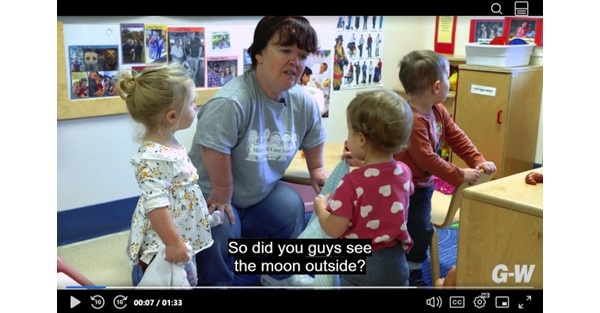
What the Authors Are Saying
 Students need and deserve to see ECE concepts in action—and instructors need the resources to help their students fill this need. Our cameras were rolling as teachers worked with ECE-aged children of all ability levels.
You Might Also Like